The documented record
Claims made before the storm
Letters. Affidavits. Recorded calls. Ted Owens claimed he could influence events at a distance. The surviving paper trail documents what he said, when he said it and what followed.
Support the film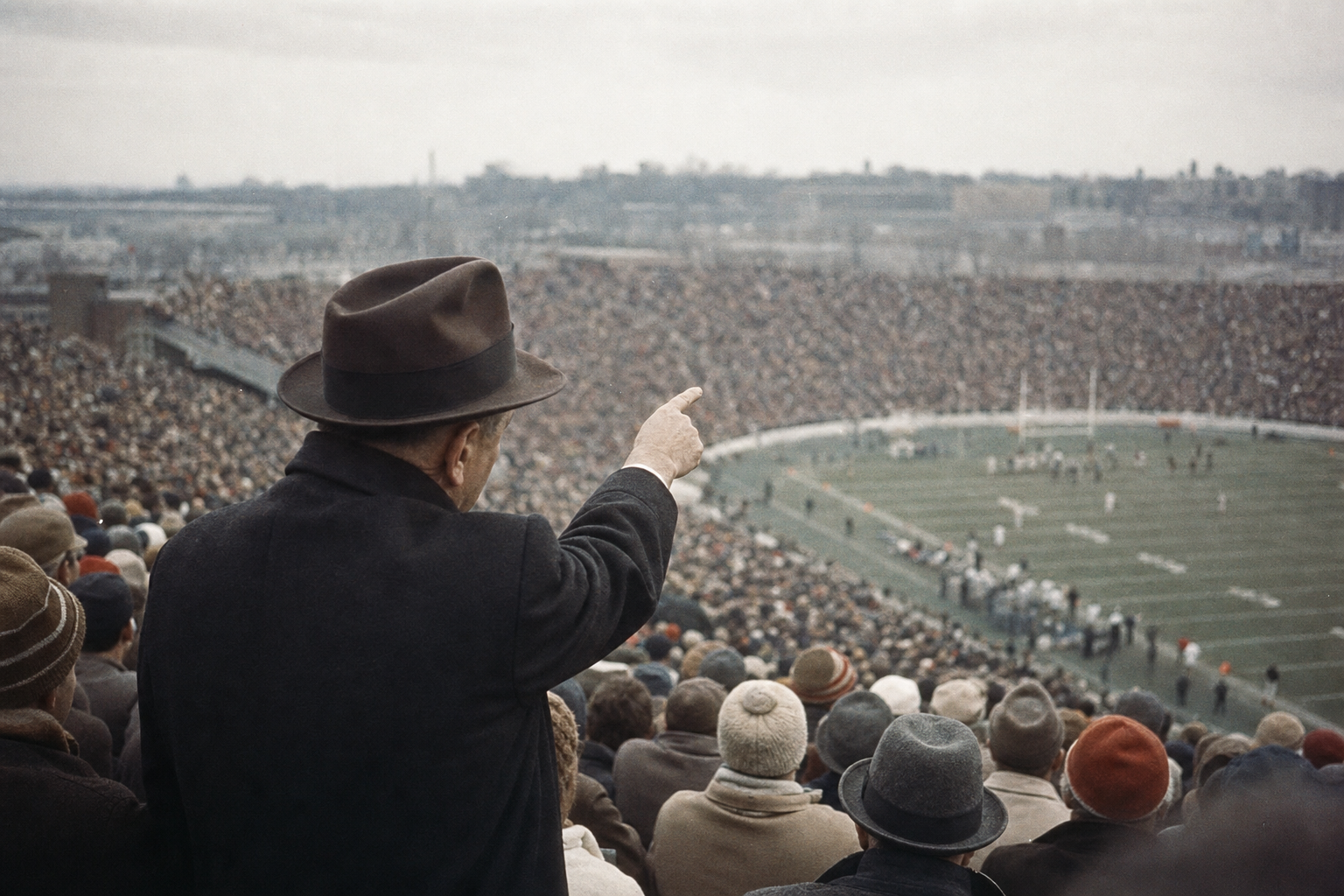
On May 8, 1967, in Philadelphia, Owens made a claim involving lightning at City Hall. The case file includes Sidney Margulies’s account and affidavits signed by witnesses Batch and Jay. The documents preserve a sequence: a statement, witnesses and a reported event.
In 1971, Owens predicted that Richard Nixon would resign. The prediction appeared in a Warren Smith book and in Saga magazine before Watergate. As Jeffrey Mishlove documented, no previous United States president had resigned. On May 30, 1972, Owens made another claim concerning Cleveland’s heat, drought, blackout conditions and lightning. That summer, the record notes three lightning deaths and a blackout.
On January 30, 1976, Owens wrote to researchers Hal Puthoff and Russell Targ concerning the California drought. On February 5, San Francisco recorded its first snow since 1887, followed by weeks of rain. On June 1, 1977, Owens called Cape Charles, Virginia, police chief Charles Powell. Five days later, a hailstorm struck and five people died. In each case, the file records what Owens communicated before the later event without treating sequence as proof.
During Hurricane David in 1979, Owens exchanged messages with Wayne Grover and later claimed that he had “cooled the cane.” The storm weakened before landfall. On April 9, 1980, Owens received a request concerning drought in New South Wales, Australia. On May 30, the Sydney Morning Herald declared the drought over. These records establish dates and correspondence, not control over weather.
Owens also claimed he could sabotage sports teams, naming the Eagles, Colts, Rams, Bullets, Squires and Cowboys. He said he could hinder a team but could not help one. Beginning in 1968, his claims were documented by Leo Sprinkle, J. Allen Hynek, Berthold Schwarz and Otto Binder; Sprinkle and Hynek later stopped corresponding with him. The film returns to that incomplete, contradictory record and asks what it can bear. Supporting the film helps this documented story reach a wider audience.